
Published: November 2, 2026
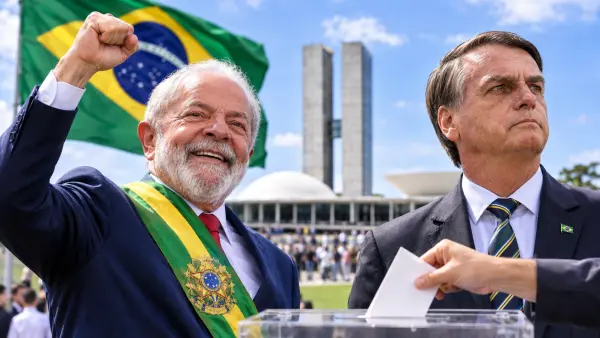
Luiz Inácio Lula da Silva won Brazil’s presidential runoff on October 25, taking a fourth, non-consecutive term. He beat Senator Flávio Bolsonaro, son of the jailed former president Jair Bolsonaro, by 51.79% to 48.21%, a margin of about 4.4 million votes according to the Superior Electoral Court (TSE). Bolsonaro had led the first round by 47% to 45%, and no candidate since direct elections returned in 1989 had lost the first round and won the runoff.
Bolsonaro refused to concede and said he would ask for the result to be annulled. His objection centers on a Supreme Court order, issued while polls were closing, that extended voting by two hours. Lula’s new term begins on January 5, 2027.
What It Changes
The Brazil snapshot framed 2026 as a test of whether Bolsonarismo could return to power with a new candidate after Jair Bolsonaro was sentenced for plotting a coup following the 2022 election. The presidency now stays on the left, but the wider picture is less settled than the headline result suggests.
Brazilians split their votes. Bolsonaro’s Liberal Party (PL) won 121 seats in the Chamber of Deputies, the largest bloc in the party’s history, and Lula’s allies lost ground in the Senate. Lula will govern with what Brazilian press describes as the most conservative Congress since the return to democracy. That limits his room on spending and social policy, and it keeps alive proposals in Congress to grant amnesty to people convicted over the coup plot.
The refusal to concede also repeats the pattern of 2022, when Jair Bolsonaro never accepted his loss to Lula. This time the legal case looks narrower. Both campaigns asked courts for extended voting in different places, the PL citing rain in three southern states and Lula’s coalition citing cuts to bus service. A legal analysis in Consultor Jurídico estimated that about 34,330 votes were cast during the extension, under 1% of the winning margin, and argued that Brazil’s electoral code offers no route to annulling the whole runoff. As of November 2, Politalking could not confirm that a formal petition had been filed.
The result also matters beyond Brazil. Lula’s win breaks a recent run of victories for right-of-center presidential candidates in Latin America who aligned themselves with US President Donald Trump.
Perspectives
Lula called the result a historic day and framed it as a defense of democracy. During the campaign he argued that a Bolsonaro presidency would let the United States exert control over Brazil, and he pointed to falling poverty and unemployment during his third term.
Bolsonaro said he would not accept rules of the game changed arbitrarily. He noted that Justice Cristiano Zanin, who ordered the extension, was previously Lula’s personal lawyer. Some of his supporters argue a fourth Lula term will damage the economy, pointing to the positive market reaction after Bolsonaro’s first-round lead. The TSE’s president, Kassio Nunes Marques, who was appointed to the Supreme Court by Jair Bolsonaro, called both candidates and confirmed Lula’s reelection.
Outside Brazil, reactions split along familiar lines. Mexican President Claudia Sheinbaum and Canadian Prime Minister Mark Carney were among the leaders who congratulated Lula. Trump told reporters on October 26 that the election looked rigged, without offering evidence, while adding that he was not running Brazil, Outlook India reported. Former Trump adviser Steve Bannon urged Washington to cut diplomatic relations with Brazil.
What to Watch
Whether Bolsonaro files a formal challenge, and how quickly the TSE rejects or hears it, will shape the transition. Electoral diplomas are due by December 19, and challenges to a mandate must be filed within 15 days of certification. Washington’s formal position on recognizing the result is still open. The first votes in the new Congress after February 2027 will show whether the PL-led right uses its numbers to block Lula’s agenda or to push amnesty legislation.
Related Links
- Brazil Politics in 2026
- Judicial Independence: The Global Picture
- Lula wins fourth presidential term (NPR)
- Flávio Bolsonaro vows to seek annulment (Anadolu Agency)
- O impossível pedido de anulação do segundo turno (Consultor Jurídico, Portuguese)
- Brazil elects its most conservative Chamber (Bahia Notícias, Portuguese)
- 2026 Brazilian general election (Wikipedia)
Discussion Questions
- Should losing candidates be legally required to concede once results are certified?
- Is it fair for a court to extend voting hours on election day? Who should make that decision in your country?
- Why might voters choose a left-wing president and a right-wing legislature at the same time?
- How much should foreign leaders say about another country’s election result?
- Imagine you are advising Lula. What is the first thing you would try to pass through this Congress?