
Published: November 5, 2026
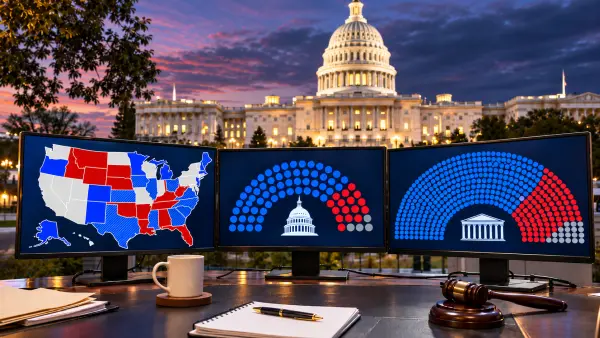
Democrats won control of both chambers of the US Congress in the November 3, 2026 midterm elections, ending two years of unified Republican government under President Donald Trump. The party flipped seven Senate seats, in Kansas, Iowa, Texas, Ohio, Maine, North Carolina and South Carolina, and gained a large House majority built on wins in suburban, rural and newly redrawn districts from Pennsylvania and Michigan to California and Texas. In Texas, James Talarico became the first Democrat to win statewide office in 32 years, and in Michigan, Abdul El-Sayed became the first Muslim elected to the Senate.
Counting is not finished. On November 4, CBS News projected at least 54 Democratic Senate seats, with the Alaska and Mississippi races still too close to call and dozens of House contests outstanding. Final margins will not change the central fact: from January 2027, a Republican president will govern alongside a Congress controlled by the opposition for the last two years of his term.
The shift reached below Congress. Democrat Gina Hinojosa defeated Texas Governor Greg Abbott, and Keisha Lance Bottoms was projected to win in Georgia, while Republican Byron Donalds won the Florida governorship. On abortion, voters in Nevada and Virginia added abortion rights to their constitutions, Missouri voters rejected a repeal of the rights they approved in 2024, and Idaho voters turned down a measure that would have protected access.
What It Changes
Going into the vote, the standing picture of US politics in 2026 was a president with unusually free rein. Republicans held 53 of 100 Senate seats and a narrow House majority, enough to pass the One Big Beautiful Bill Act in 2025, while the administration ran trade, immigration and a war with Iran largely through executive action. The midterm overturns the first half of that picture and touches the second half far less. Readers used to parliamentary systems should note the difference: a defeat on this scale would usually bring down a government, but in the US presidential system Trump remains in office until January 2029, and the result is divided government rather than a change of government.
Legislation and the veto. Democrats can now stop Republican bills and pass their own, but the president can veto them, and overriding a veto requires two-thirds of both chambers. Democrats are well short of that in each, so anything Trump opposes needs Republican votes to become law. House Democratic leader Hakeem Jeffries, expected to become Speaker, has listed his immediate legislative priorities: reversing the Medicaid and food assistance cuts in the 2025 budget law, restoring expired health insurance tax credits, ending the Iran war and rolling back tariffs. Trump has said he will work with Democrats while using his veto, so early 2027 is likely to bring passed bills that die on his desk, which is itself a way for the new majority to put its agenda on record before the 2028 election.
Oversight and investigations. The bigger immediate change is that Democrats will chair every committee in both chambers from January, with power to hold hearings and issue subpoenas. Robert Garcia, the top Democrat on the House Oversight Committee, told allies to “lawyer up,” according to CBS News. Likely targets named so far include immigration enforcement and data sharing between tax and homeland security agencies, the handling of refunds for tariffs the courts struck down, imports of Russian diesel, and the conduct of the Iran war.
Money and the December deadline. The outgoing Republican Congress returns for a lame-duck session first, and current government funding expires on December 11. After January, every spending bill must pass a Democratic House and Senate, which makes annual appropriations the opposition’s main lever over defense spending, immigration enforcement budgets and foreign aid. Using that lever risks government shutdowns, a tool both parties have used and been blamed for in recent years.
The Senate and appointments. John Thune loses the majority leader post in January, and Chuck Schumer is expected to take it. Because the Senate confirms cabinet members, ambassadors and federal judges, a Democratic Senate can slow or block nominees, including any Supreme Court vacancy that arises before 2029. This is one of the few areas where the result constrains the president directly rather than through legislation.
Trade and tariffs. The election lands on a trade policy already reshaped by the courts. The Supreme Court ruled on February 20, 2026, in Learning Resources v. Trump, that the emergency powers law the administration had used does not authorize tariffs. The administration then shifted to other trade statutes, including Sections 122, 232 and 301, none of which requires routine congressional approval. Tariffs imposed under Section 122 lapse after 150 days unless Congress extends them, a decision that now sits with a Democratic majority. Measures aimed at China, such as tighter export controls on advanced chips and limits on outbound investment, have support in both parties and may advance regardless. For trading partners from Ottawa to Seoul, the practical message is that courts remain the main legal check on tariffs over the coming year, while Congress mainly adds hearings, pressure and uncertainty.
The Iran war. The war the United States launched alongside Israel in February, without congressional authorization, was a central issue in the campaign. Trump has acknowledged that the conflict and the fuel price rises that followed cost Republicans seats, while insisting the decision was right. A Democratic Congress has two formal tools: War Powers Resolution votes, which past Congresses have used with little effect, and funding. Analysts quoted by Al Jazeera warn that cutting money while troops are deployed is politically difficult, and some raise the opposite risk, that a president who will not face voters again may escalate rather than retreat. Indirect ceasefire talks mediated by Qatar and Pakistan were under way before the vote, and Trump had suggested strikes could resume after it.
Ukraine and Russia. US aid to Ukraine has been cut under Trump, and in October he waived Russia sanctions that Congress had approved by large margins. Democratic aides say support for Kyiv will be a priority from January, and Democrats may try to remove the waiver authority the president used. The limit is the same as on Iran: Congress can appropriate aid and write sanctions into law, but the White House controls how they are carried out, and US-brokered Russia-Ukraine talks are scheduled in Abu Dhabi for November 10 and 11.
Immigration. The administration’s deportation drive will continue under executive authority, but its budget and methods now face hostile committees. Public opinion had moved before the vote: a Fox News poll found 53 percent of registered voters felt the crackdown had gone too far. The Department of Homeland Security says about 70 percent of its detainees are criminals when pending charges are counted; critics dispute that figure because it treats people who have only been charged as offenders.
Abortion and state policy. Abortion law in the United States has been set state by state since the Supreme Court overturned Roe v. Wade in 2022, and the 2026 ballot measures extend that pattern rather than changing the national picture. Abortion rights won in three of the four states that voted, but Idaho’s rejection shows the map remains divided. NBC News also reported that voters in several states backed photo identification and citizenship requirements for voting, a reminder that the same electorate that rejected the president’s party did not move uniformly to the left on every question.
What does not change. The president keeps wide discretion over foreign policy, military deployments, sanctions enforcement and most remaining tariffs, and his cabinet stays in place; Trump has described the result as a passing moment and ruled out a shake-up. The midterm also restarts the clock on the 2028 presidential race, since Trump cannot run again and the Republican succession, including Vice President JD Vance, is now being argued in the open.
Perspectives
At home, the two parties read the result differently. Trump said he accepted the outcome, blamed his absence from the ballot and what he called flawed candidates, and argued that higher gasoline prices hid a strong economy. Vice President Vance broke with that framing, writing that “the reason we lost is the war.” Republican strategist James Davis told Al Jazeera the deeper problem was unclear messaging, along with energy and diesel costs. Jeffries declared that “America is back,” and Democrats framed the vote as a mandate on health care costs and the price of living. Republicans pointed to holding the Florida governorship and to Trump’s claim that his own coalition remains intact.
Abroad, the most pointed response came from Tehran. Iran’s parliament speaker and chief negotiator, Mohammad Bagher Ghalibaf, framed the vote as a rejection of the war and warned Washington against ignoring it. In Israel, Prime Minister Benjamin Netanyahu made no immediate comment, while opposition leaders Yair Golan and Yair Lapid argued the result showed Netanyahu’s standing had eroded in both US parties. Gulf governments stayed publicly silent, though Reuters reported they expect Trump to have stronger reasons to seek a peace deal.
In Europe, reactions split between celebration and caution. Spanish Prime Minister Pedro Sánchez called it a sign that the far right was fading and predicted a similar outcome in Spain’s November 29 election. British Prime Minister Andy Burnham tied the result to fuel costs, saying he could not ease cost of living pressures until the Middle East conflict ends. European Parliament Vice President Christel Schaldemose said she was cautiously optimistic about Ukraine support and climate policy. Austria’s foreign minister, Beate Meinl-Reisinger, argued that Europe’s security should not depend on how voters in Kansas or Iowa cast their ballots, while British and Greek officials stressed that relations with Washington would not change.
Moscow played the result down. Kremlin spokesman Dmitry Peskov said Russia hoped Trump would continue his peace efforts regardless, and Deputy Foreign Minister Sergey Ryabkov said Russia’s Ukraine policy does not depend on other countries’ politics. Ukrainian President Volodymyr Zelenskyy said he hoped Democratic control would bring more US help. In Asia, China’s foreign ministry called the election a domestic affair and said it would keep a constructive relationship with Washington, and Japan’s chief cabinet secretary, Minoru Kihara, described the alliance as the cornerstone of Japanese security policy.
In the Americas and Africa, Mexican President Claudia Sheinbaum said it was too early to judge, and Canadian Trade Minister Dominic LeBlanc suggested waiting until the new Congress meets in January, while Ontario Premier Doug Ford said the result gives Canada more leverage against tariffs. South African President Cyril Ramaphosa, whose government has clashed with the Trump administration, said the result opens a new era in world relations. Laurel Rapp of Chatham House offered a more cautious reading for allies: Congress will find it easier to constrain Trump at home than abroad.
What to Watch
The Alaska and Mississippi Senate counts and the remaining House calls will set the size of the new majorities. Before January, the lame-duck Republican Congress faces the December 11 funding deadline. Abroad, the Iran ceasefire talks and the November 10 to 11 Russia-Ukraine meeting in Abu Dhabi will show whether a weakened president leans toward deals or escalation. When the new Congress convenes in January 2027, the first tests are the Speaker vote, the first subpoenas, the first vetoes, and whether any bill on tariffs, Ukraine or the Iran war attracts enough Republican votes to survive one.
Related Links
- United States Politics in 2026
- Abortion: The Global Picture
- Immigration: The Global Picture
- PBS NewsHour (AP): World leaders react to the Republican election rout
- Al Jazeera: Can Democrats stop the Iran war and reverse tariffs?
- Baker McKenzie: How Democratic control of Congress affects trade
- Ballotpedia: 2026 abortion ballot measure results
Discussion Questions
- Does your country have a midterm election or any regular vote that lets citizens judge a leader halfway through a term?
- Why do you think the party holding the presidency so often loses seats in US midterm elections?
- The article says Congress can constrain a president more easily at home than abroad. Do you agree?
- Should a legislature be able to stop a war by cutting off its funding?
- Imagine you are a trade negotiator from your country. Would you wait for the new Congress or keep dealing directly with the White House?